
For private landlords and property managers, a good resin driveway is rarely top of the priority list until a tenant complains about puddles, moss or a cracked surface between lets. Get the surfacing right, though, and it quietly does a lot of work: it looks smart in listing photos, copes with wet winters and heavy use, and stops becoming a headache at the end of tenancy.
A well-installed resin bound driveway reduces void periods, keeps tenants happy and keeps a lid on the upkeep costs that tend to creep up between tenancies. For landlords across Devon, Cornwall, Somerset and Dorset, it is one of the few surfaces that reads as “looked after” rather than “due a refurb”.
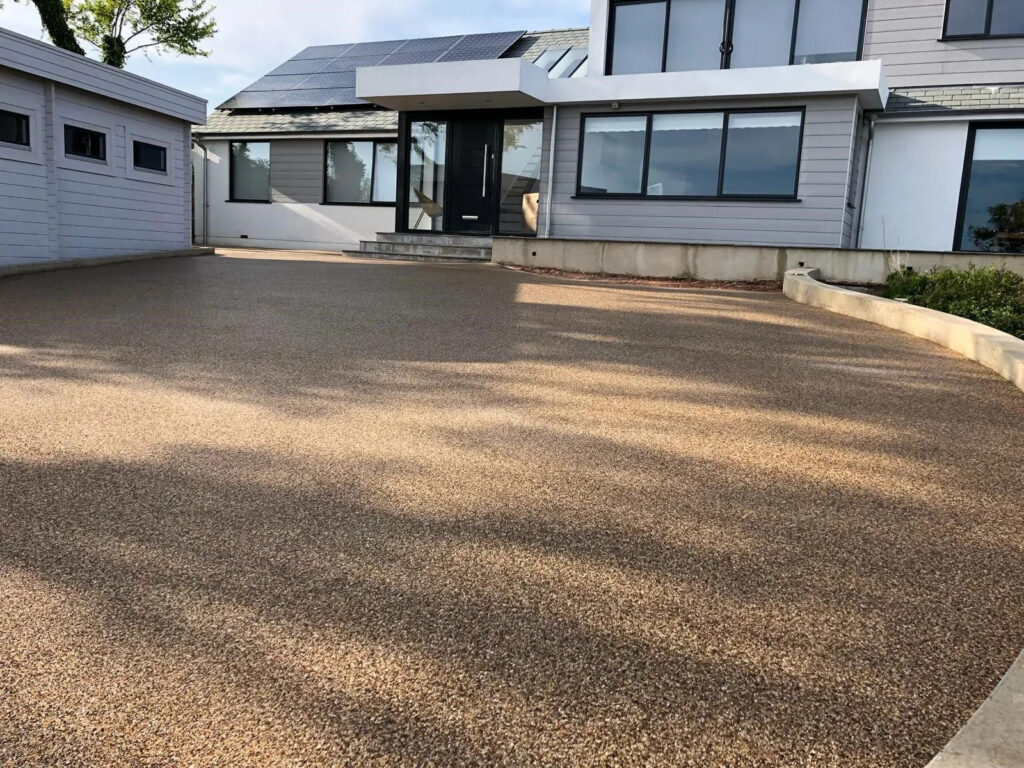
Resin bound surfacing is a mix of natural stone aggregate and clear UV-stable resin, trowelled onto a prepared base to form a smooth, seamless, porous finish. For a landlord, that translates into practical benefits that show up on the day-to-day management side.
Resin bound is also permeable, so paving a house’s front garden usually falls within permitted development, and it helps with surface-water management. If you are weighing the wider financial case, it is worth reading our guide on whether a resin surface pays for itself.
Take a look at our article ‘Do resin driveways add value to your home?’
Most landlords need the work done quickly and without fuss. There are two common approaches, and the right one is decided after a site survey.
When the existing base is unstable, or you want a guaranteed long life, a full installation removes the old surfacing, repairs the sub-base and lays a fresh resin bound surface. A typical schedule runs:
Day 1 – remove the old surface and make base repairs as required.
Day 2 – lay the base course and compact.
Day 3 – apply the resin bound surface and allow it to cure.
Larger driveways and pathways take longer, but with the work scheduled around viewings and checkouts you can keep void time to a minimum.
When the substrate is sound, a resin overlay is the least disruptive option. We prepare and prime the existing surface, then apply the resin bound layer straight over the tarmac or concrete. For a rental in a tight terrace, the benefits are obvious:
Overlays are also a sensible route where several units share one approach. If that applies to you, our guide to resin surfacing for shared driveways covers loadings, drainage and getting neighbours on the same page.

Resin bound is not maintenance-free, but it is straightforward to keep looking sharp. A short, regular routine prevents stains, holds back moss and keeps the surface safe underfoot.
Moss and algae are the most common tenant-reported issue, particularly on shaded South West plots. Our walkthrough on battling moss and algae on a resin driveway sets out the full routine, and for oil drips from tenants’ cars, our guide to preventing oil and stain damage on resin driveways explains how to deal with marks before they set.
The simplest win is to include a one-page care sheet in the tenancy pack, with these steps and a few plain dos and don’ts. That small addition heads off avoidable damage and cuts down on maintenance calls. Landlords who would rather not manage it at all can hand the whole job to our resin bound maintenance service.
Two practical points are worth checking on any rental job: slip resistance and insurance.
Because resin bound is porous, it drains freely and reduces the standing water that causes most slips. You should still confirm the slip rating of the finish you choose, especially if the property will house elderly tenants or see heavy footfall.
Small, low-cost decisions make a property look cared for and shorten the marketing window between lets:
Tenant demand is shifting, too. More renters now expect somewhere to charge an electric car, and resin can be laid neatly around a charge point during installation. Our guide on designing a resin driveway around an EV charge point covers the practical detail.
Because we install the full range of resin surfaces, a rental’s drive, resin patios and any resin balconies can be finished in one matching blend for a designed-as-one look, and we cover commercial resin surfacing for larger blocks and communal areas too.
For a free site survey, technical advice on slip resistance and permeability, or to talk through overlay options to reopen a property quickly, get in touch. We use VUBA Binding Quartz systems, protect your deposit until the work is signed off, and stand behind every full build with a 10-year guarantee. Call us on 01626 248768 or email hello@resindrivewayexperts.co.uk.
For most landlords in the South West, resin bound is the strongest all-rounder. It is low maintenance, drains freely so it resists moss and puddles, has no joints for weeds to grow through, and photographs well for listings. Tarmac and imprinted concrete are alternatives, but they tend to look tired faster and offer less kerb appeal between tenancies.
A properly installed resin bound surface is not slippery. It is porous, so water drains away rather than pooling, and a textured aggregate can be specified for extra grip on slopes or steps. The main cause of a slippery resin drive is neglected moss or algae, which a simple cleaning routine prevents.
A professionally installed resin bound driveway typically lasts 15 to 25 years with routine cleaning and the occasional reseal. Our 10-year supplier and installation guarantee covers the window that matters most to insurers and, if you sell, future buyers.
In most cases, no. For a house, a permeable resin bound surface that drains on site usually counts as permitted development, so paving the front garden needs no application. There are exceptions worth flagging for landlords: flats, maisonettes and converted houses do not have the same permitted development rights, and listed buildings or conservation areas may need consent. We check this during your free survey.
Yes, when you look at the whole picture rather than just the upfront price. A durable, low-maintenance surface means fewer repairs, fewer tenant complaints and quicker re-lets, while the finish protects kerb appeal and resale value across a 15 to 25 year life.