
The area around a pool works harder than almost any other surface in the garden. It is splashed constantly, walked on with bare wet feet, exposed to summer sun, and has to cope with chlorine, salt and standing water for the rest of the year.
Choosing the right finish is the difference between a poolside that stays safe and smart for years and one that turns slippery, cracked or tired within a couple of seasons. Our resin pool surrounds work shows what a modern surround can look like, but this guide compares all the main choices first so you can decide for yourself.
At Resin Driveway Experts, we help homeowners across the South West choose the best surface for their pool surround and install it with a 10-year guarantee.
There is no single answer that suits every pool. The right surface depends on what matters most to you, whether that is grip, drainage, how it feels underfoot, the look, or how little upkeep you want to take on. Below we run through the most popular options, with the pros and cons of each, and explain why resin bound is the choice we recommend for most domestic pools.
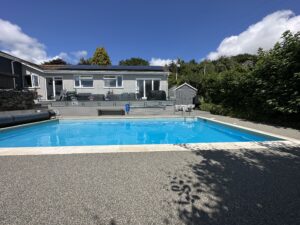
Before comparing materials, it is worth being clear about what a pool surround actually needs to do. A few things matter more than the rest.
The first is grip. Wet feet on a smooth surface carry a real risk of slipping, and pool areas are one of the most common places for slips at home, so good grip when wet is not negotiable. RoSPA’s guidance on preventing slips and falls is a useful reminder of why this matters around water.
Drainage matters just as much. Water needs to move away from the pool quickly rather than sitting on the surface or running back toward the house. A surface that holds water stays slippery for longer and grows algae faster.
Comfort underfoot is easy to overlook until you are on it in bare feet, and dark, dense materials can get too hot in summer. On top of that, the surround has to cope with frost, sun, chlorine and constant foot traffic without cracking or fading, and ideally it should look after itself rather than turning every weekend into a cleaning job.
In short, a good pool surround surface should be:
Natural stone such as sandstone, limestone or granite looks beautiful and suits period and rural properties especially well.
Porcelain has become a popular modern choice, dense and colour-stable.
Block paving is durable, widely available and easy to repair.
Concrete is hard-wearing and inexpensive to lay over a large area.
Decking gives a warm, soft feel underfoot and suits raised or above-ground pools.
Resin bound surfacing mixes natural aggregate with a clear UV-stable resin to create a smooth, seamless finish laid as one continuous surface with no joints.
For most domestic pools, our recommendation is resin bound. It is the one surface that ticks every box at once: reliable grip when wet, permeable drainage, a cooler feel underfoot, and a seamless finish with no joints for weeds or algae.
That does not make it right for every garden. If your heart is set on a particular stone for a period cottage, that look may be worth the extra care. But if you want a surround that stays safe, drains well and looks good without much fuss, resin bound is the one we would point you to. You can see finished examples in our recent resin projects.
At a glance, here is how the main pool surround surfaces compare:
| Surface | Grip when wet | Drainage | Stays cool underfoot | Upkeep | Joints and weeds |
|---|---|---|---|---|---|
| Resin bound | Good | Permeable, drains through | Yes | Low | None, laid seamless |
| Porcelain tiles | Good if anti-slip rated | Non-permeable | Moderate | Low to medium | Grout lines |
| Natural stone | Moderate | Non-permeable | Dark stone gets hot | Higher, needs sealing | Mortar joints |
| Block paving | Moderate | Limited | Moderate | Medium to high | Sand joints |
| Poured concrete | Poor to moderate | Non-permeable | Gets hot, can glare | Medium | None, but prone to cracking |
| Timber or composite decking | Poor, slippery over time | Drains through gaps | Yes | Medium to high | Gaps between boards |
Whatever finish you choose, the base beneath it is what determines how long the surround lasts. With resin, the surface is only ever as good as what sits underneath.
A few things have to be right before any resin goes down:
Before any installation we survey the substrate, check levels and recommend repairs or a new base where needed. In many cases an existing sound slab or patio can take a resin overlay, which saves time and waste compared with a full rebuild.
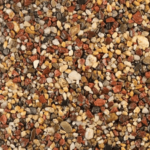
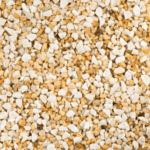

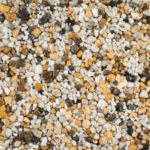
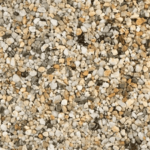

Resin is one of the easiest surfaces to design around, with a wide range of colours to suit any setting:
It is always worth viewing a few sample square metres on site, as daylight, cloud and rain all change how a colour reads – above are just come of our many resin stone colours available.
If your pool sits next to a patio or a raised terrace, finishing the resin patio or balcony in the same blend gives a designed-as-one look that ties the whole space together.
Resin surrounds are low maintenance, not maintenance free, and a little regular attention keeps them safe and looking their best:
Our guide to tackling moss and algae on a resin surface covers the routine in full, and our resin cleaning and maintenance service handles it for homeowners who would rather not.
We have spent more than three decades installing resin surfaces across the West Country from our base in Newton Abbot, and the experience shows in the detail of every pool surround we lay.
You can explore more of our work across the full range of resin surfacing via our recent projects in the gallery.
Trying to settle on the best surface for your pool? The easiest next step is a free site survey. We will assess the existing base, check the falls and drainage, talk through colour and texture samples on site, and give you a clear written recommendation with no pressure.
Call us on 01626 248768 or email hello@resindrivewayexperts.co.uk. We work across Devon, Cornwall, Somerset and Dorset.
For most domestic pools, resin bound is the strongest all-round choice. It combines reliable grip when wet, permeable drainage, a cooler feel underfoot and a seamless finish with no joints for weeds or algae. Porcelain and natural stone are good alternatives if you prefer a tiled or traditional look, but both involve joints and more upkeep.
No, a correctly specified resin bound surround offers good grip even when wet, because the textured aggregate breaks up the surface. Choosing a medium or coarser texture around steps and entry points adds extra slip resistance where it matters most.
Yes. Water has to move away from the pool quickly so it does not pool on the surface or run back toward the house. Resin bound is permeable, so water drains straight through it, which is one of its main advantages over non-permeable surfaces like resin bonded, concrete or standard porcelain laid on a slab.
Often, yes. If the existing slab or paving is structurally sound, free of significant cracks and has adequate falls, a resin overlay can be laid over it, saving time and waste. Where the base is unstable or cannot drain properly, a new base is the better long-term option. We confirm which applies during a free site survey.