18 June 2026 James resin driveways, resin maintenance
You love the clean, seamless look of your resin bound driveway, pathway or patio, but one careless oil drip or months of tyre scuffing can leave a patchy, discoloured surface. Furthermore, damp weather and falling leaves add a second challenge, so knowing what to do straight away and what to avoid will save time and protect the finish.
Resin Driveway Experts have more than 30 years installing and maintaining resin surfaces from our base in Newton Abbot, covering Devon, Cornwall, Somerset and Dorset, and we back our work with a 10-year guarantee. This practical guide explains everyday prevention, safe DIY cleaning steps and the approved products and techniques we use, plus clear guidance on when to book professional resin cleaning or resin overlays.
Why Oil, Tyre Marks and Organic Stains Matter
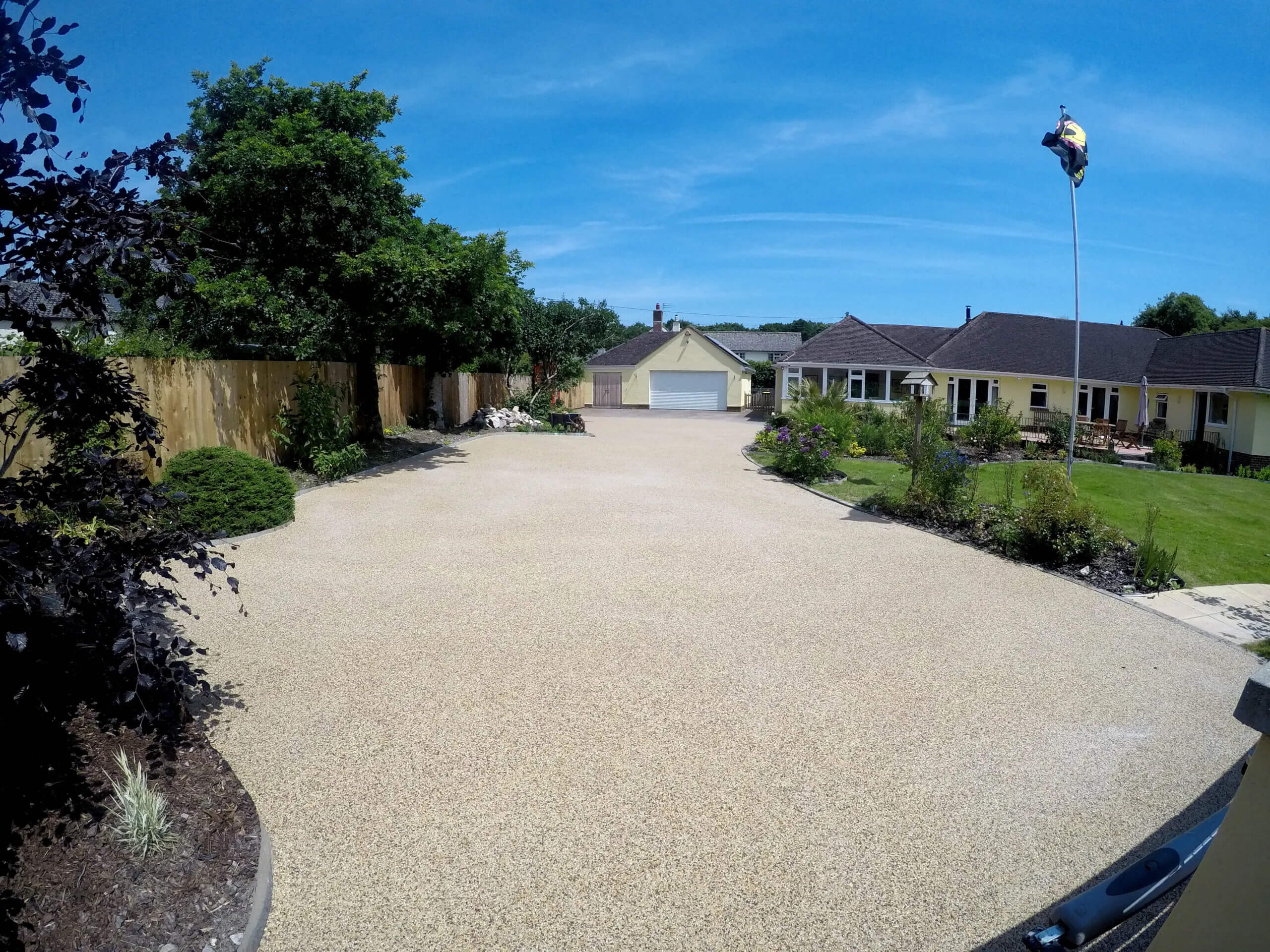
Resin bound surfaces look great because fine aggregate sits in a clear polymer binder. That binder can absorb or trap liquids, allowing stains to show through. Left untreated, oil and other contaminants can:
- Create long-lasting dark patches
- Reduce the surface slip resistance
- Hide the natural colour and texture you chose when the driveway was installed
The South West climate makes regular attention important. Frequent rain keeps the surface damp, which helps moss and algae to establish in shaded areas, while autumn leaves and coastal vegetation can leave tannin stains if not cleared promptly.
Everyday Prevention: Small Habits That Make A Big Difference
Parking and vehicle care
- Park carefully: If you can, avoid leaving vehicles over the same spot for long periods. Cars that drip oil create repeat stains in one place.
- Use drip trays for maintenance: When topping up oil or carrying out light repairs, place a shallow tray or absorbent mat under the drip area.
- Avoid prolonged heavy loads: Regular parking of heavy trailers or commercial vans can stress the binder and increase tyre marking. This might be a factor when considering resin surfacing for a shared driveway.
Routine upkeep
- Sweep weekly: Remove leaves, soil and grit to prevent tannin staining and mould growth.
- Trim overhanging branches: Reduce leaf fall and the shady, damp patches where algae thrive.
- Rinse after spillages: A quick hose-down after light spillages stops staining from settling.
Safe DIY Cleaning Methods and Approved Products
Start with the gentlest method that will do the job. Always test any cleaner on an inconspicuous area before treating a visible patch.
Immediate action for fresh oil spills
- Act quickly: Blot fresh oil with absorbent paper or kitchen towel. Do not rub, as that spreads the stain.
- Apply an absorbent: Aprinkle cat litter, sawdust or an absorbent granule to lift remaining oil. Leave for several hours, then sweep up.
- Wash with warm soapy water: Use diluted washing-up liquid and a medium-stiff brush, working in a circular motion, then rinse thoroughly.
Cleaning tyre marks
- Try a rubber removal pad: For recent marks, a rubber eraser pad or specialist tyre mark pad can remove surface rubber without damaging the binder.
- Use a resin-safe degreaser: Apply a water-based, low-foaming, resin-safe degreaser according to product instructions, agitate with a brush, then rinse.
Removing organic stains, moss and algae
- Mechanical removal first: Sweep and brush to remove loose material, then use a low-pressure jet wash from 1 metre away to lift embedded dirt. Take a look at our guide on battling moss and algae on resin driveways for more information.
- Biodegradable treatments: Treat persistent moss or algae with a biodegradable, resin-safe fungicidal cleaner. Follow the label and use only products approved for porous resin surfaces.
Products and tools to use and avoid
- Use: pH-neutral detergents, water-based degreasers marked safe for resin bound or porous paving, medium-stiff nylon brushes, and low-pressure jet washing equipment.
- Avoid: Strong acids or alkalis, bleach or chlorinated products, solvent-based degreasers such as white spirit, and wire brushes. These can damage the polymer binder and change the surface texture and colour.
- Always patch test: Try any new product on a small, hidden area and allow it to dry so you can check for colour change or binder softening.
When To Book Professional Cleaning or Overlays

DIY methods work for small, fresh stains and routine upkeep, but call specialists if you see any of the following:
- Large or long-standing oil contamination: Oil that has soaked in over months will often need a professional poultice or chemical treatment to extract it without harming the binder.
- Widespread tyre marking or loss of resin binder: When the surface has many scuffed areas, the finish and slip resistance can be affected.
- Deep-set organic staining or mould across shaded areas: Persistent growth sometimes requires professional hot-water pressure cleaning and biocide treatment to remove and prevent return.
- Ageing surface or binder breakdown: If the surface shows patchy sheen loss or becomes rough, an overlay may be the most effective way to restore appearance and performance.
Professionals have access to poultices, low-temperature steam cleaning and resin-compatible detergents that are not available to most DIYers. If an overlay is the correct option, a full site survey will confirm bond suitability and the best finish for your property.
How Resin Driveway Experts Protect Your Investment
We install, clean and overlay resin bound driveways, pathways, patios, pool surrounds and balcony surfaces across Devon, Cornwall, Somerset and Dorset. With over 30 years’ experience based in Newton Abbot we understand how local weather, coastal conditions and common vehicle use affect surfaces, and we back our work with a 10-year guarantee. Call our expert team today who will be happy to discuss your resin driveway installation and cleaning requirements.
- Expert assessment: We identify whether cleaning alone will suffice, or if an overlay is necessary to restore performance and appearance.
- Specialist cleaning: Low-pressure thermal cleaning, resin-safe degreasing and poultice techniques remove contaminants while protecting the binder.
- Overlay options: Where wear or contamination is widespread, we can apply a fresh resin bound overlay to renew texture and colour, with correct profiling and drainage.
- Guarantee and local backup: Our 10-year guarantee and local teams mean you have recourse if issues develop, and a contractor who knows the South West climate and towns from Exeter to Penzance and Weymouth to Taunton.
Quick Checklist You Can Use Now
- Immediate spill: Blot, apply absorbent, sweep when dry, then wash with warm soapy water.
- Weekly: Sweep leaves and debris, rinse off surface dirt.
- Monthly: Inspect for tyre marks and shaded areas showing algae, treat early.
- Annually: Consider a professional clean to lift deep-seated dirt and refresh anti-slip properties.
- Before major works: If you plan heavy vehicle use or parking, discuss protection measures with your installer.
