
Fixing a pergola, a parasol base or a swing set to a resin bound patio is one of the most common questions we get once a surface is down. Resin bound surfacing is not the same as a solid concrete or paved patio: it is a wearing course laid over a structural base, so anchoring the wrong way can crack the finish, let water into the base underneath, or cause problems with your guarantee.
This guide covers the fixing methods that actually work, when to drill and when not to, what changes if your resin is an overlay, and how the West Country’s wet climate affects the advice.
Resin bound patios are a wearing course laid over a structural base or an overlay. The visible surface is not usually structural on its own, so a fixing that only grips the resin layer risks pulling out or cracking the finish. Anchors that concentrate load at a single point can also let moisture into the base below, and in some cases affect your guarantee if the work is not carried out correctly.
Good anchoring protects the finish, keeps the surface permeable, and avoids staining or lifting around the fixing point. In coastal towns such as Plymouth, you also need corrosion-resistant fixings, since salt air speeds up rust.
Which fixing you need depends on three things: the weight and movement of the structure, what is underneath your resin, and how exposed the spot is to the elements. Here are the main options and when each one applies.
| Fixing Type | Best For | How It Works | Key Tip |
|---|---|---|---|
| Surface-mount brackets | Benches, planters, light pergola posts on baseplates | A bracket sits on the resin surface and is fixed through with stainless steel screws and neoprene washers to protect the finish | Use a wide baseplate or a timber pad under the bracket to spread the load |
| Through-bolts with load distribution | Heavy pergolas, balustrades, railings and solar mounts | A hole is bored through the resin down to the concrete, block or compacted subbase, then fixed with stainless steel through-bolts and large backplates | Add a corrosion-resistant backing plate or timber packer under the head to spread the load and protect the resin from point stress |
| Chemical anchors and resin sleeves | Permanent fixings in concrete subbases and heavy point loads | A resin or epoxy adhesive is injected into a drilled hole, a stainless steel rod or sleeve is inserted, and the adhesive cures into a mechanical bond | Choose an adhesive rated for exterior use and the wet conditions common in the West Country |
| Adhesive-mounted options | Small trims and non-structural fixtures, where drilling is not wanted | A structural adhesive bonds the fitting directly to the resin surface | Test an inconspicuous area first, and avoid adhesives that seal an impermeable patch over a permeable surface |
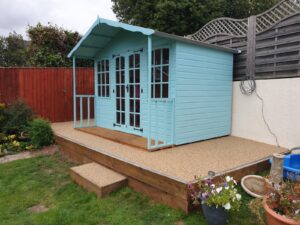
If your resin is an overlay on an existing surface, you need to be sure the original base is sound before fixing anything to it. A recent overlay can be a thin wearing course, and a fixing that relies on that layer alone is likely to fail.
Resin bound surfaces are permeable, which helps manage surface water in a wet climate. Fitted badly, though, fixings can block drainage paths or let water track into the subbase.
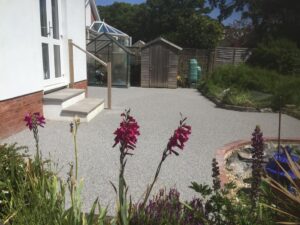
A yearly check keeps small issues from turning into repairs.
Not if it is done correctly. Fixings that spread the load into the structural base and protect the surface with washers or backing plates will not affect your guarantee. It is worth checking with us first if you are planning anything load-bearing, so the work does not put your cover at risk.
Yes, for lightweight items. Surface-mount brackets with a wide baseplate, or a structural adhesive rated for exterior use, both avoid drilling and work well for benches, planters and light furniture.
Yes, as long as the load is taken into the structural base rather than the resin layer itself. That usually means through-bolts or chemical anchors fixed down to concrete or a compacted subbase, not fixings that rely on the resin alone.
A4 (316) stainless steel is the safest choice in exposed coastal locations, since ordinary steel corrodes far faster in salt air. Pair it with neoprene washers to protect the resin finish at the contact point.
Resin Driveway Experts has more than 30 years of experience installing and maintaining resin bound surfaces across the South West, all backed by a 10 year guarantee. If you are planning a pergola, balustrade or solar mount and want to be sure it is fixed without risking your surface or your cover, contact us and we will talk you through the safest way to do it for your patio.