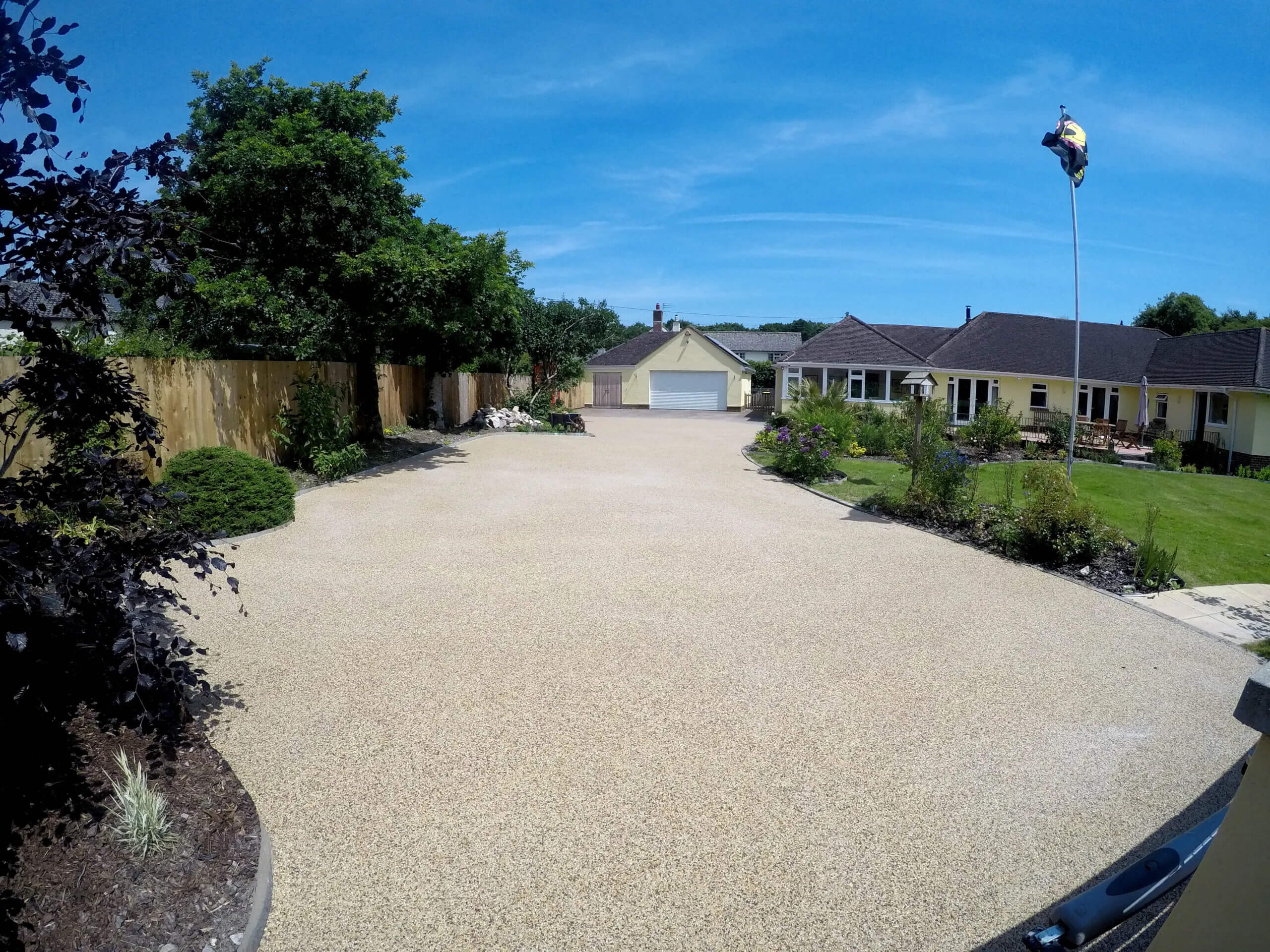
Tired of mowing a small front lawn that never looks tidy, or fed up with a muddy grass verge that turns to mud every West Country winter? Many homeowners are converting an unused patch of garden into a proper resin driveway surfacing, from Torquay to Truro and towns right across the South West, giving them off street parking, a neat kerb appeal and a lot less upkeep.
The idea is straightforward, but the process raises a few practical questions: can you actually do this, do you need permission, and what does the work involve. This guide walks through all three.
Yes, in most cases you can convert a front garden or lawn into a driveway. It is one of the most common small projects we carry out across Devon, Cornwall, Somerset and Dorset. Resin bound surfacing suits this kind of conversion particularly well because it is permeable, giving a tidy, low maintenance finish that copes with the rain and mud typical of a West Country winter, without looking like a slab of tarmac outside a period cottage. The same conversion works just as well for a side path or front patio area if parking is not the only goal.
This is the question homeowners ask most, and the answer depends on two separate things: the surface you choose, and whether you need to drop the kerb for vehicle access.
Because we survey the site before any work begins, we will flag if your project is likely to need a kerb crossover application or falls into a conservation area, so there are no surprises partway through.

Most homeowners want a surface that complements slate roofs, honey coloured stone and coastal brick. Popular directions include natural stone tones for period cottages, cooler coastal greys for modern homes near the coast, and blended aggregates that hide light dirt on cottage front gardens. Browse the full range of resin colours or we can bring samples to your site visit so you can see how a shade works in West Country light.
For a small front garden conversion, the typical process runs to a survey and quote, a day for turf removal and sub base preparation, a day for laying, and a curing period before the surface takes light vehicle use, longer in colder or damp weather. Disruption is limited to the working footprint: expect some noise during sub base compaction and some mud while turf is removed, and we tidy up at the end of each day.
One of the main reasons homeowners make the switch is to cut down on regular upkeep. A resin bound driveway is low maintenance, though not no maintenance: keep it clear of leaves and debris, give it an occasional wash to remove moss or staining, and deal with oil or paint spills quickly. If you would rather leave it to a professional, we also offer resin cleaning and maintenance visits, useful given how damp Devon and Somerset winters can get.
Usually not, provided the surface is permeable, such as resin bound, and rainwater drains away sensibly. Impermeable surfaces over a certain area are more likely to need permission. Conservation areas and listed buildings can have tighter rules, so check with your local council if you are unsure.
Yes, if your car will cross the pavement to reach the new driveway you will normally need approval from your local highway authority for the dropped kerb itself, separate from any planning permission for the surface.
In most cases, yes. It is one of the most common driveway projects we carry out across the South West, and a permeable resin bound surface is usually the simplest route from a permissions point of view.
A permeable, or porous, surface lets rainwater soak through rather than running straight off into the road. Resin bound surfacing is permeable by nature, which is one of the reasons it is often exempt from planning permission that applies to solid driveways.
Resin Driveway Experts has more than 30 years of experience installing and maintaining resin bound surfaces across the South West, all backed by a 10 year guarantee. If you are considering converting a front garden or lawn into a driveway, contact us for a free site visit. We will measure up, explain what permissions may apply to your property, and give you a clear plan for the work.